Artificial Intelligence Lab aim to solve various real-world problems by applying learning- and inference-based approaches. The areas we address
cover a wide range of AI-topics including machine learning, natural language processing, statistical inference, and computer vision. Mathematical
modeling and programming are mainly employed to tackle such problems, and thus form an integral part of our research. Our ongoing goal is to find
ways to join inductive and deductive AI in order to form robust and flexible AI models
Brain-Inspired Computing Lab (BCL) primarily focuses on neuromorphic computing, which involves the development of innovative algorithms and
architectures for both deep learning and spiking neural networks that are inspired by the brain.
The Software and Artificial Intelligence Lab aims to harness advanced software and programming language techniques to tackle and solve complex
artificial intelligence challenges such as performance, accuracy, and reliability in machine learning.
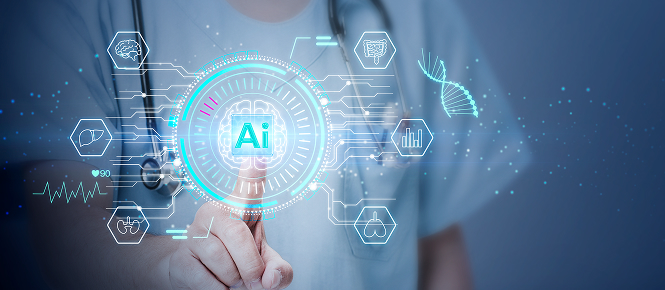
Ho Lab is an interdisciplinary team bridging between engineering and medicine. The team's mission is to improve patient care and to assist
clinicians with artificial intelligence (AI) models quantitatively analyzing medical images. The team closely collaborate with medical experts to
use the AI models for diagnosing cancer and predicting survival outcome and treatment response. Ho Lab is affiliated with the Department of
Electrical and Computer Engineering at the State University of New York, Korea (SUNY Korea).
The vision of Advanced Precision Engineering Lab (APEL) is to be a center equipped with cutting-edge technologies and research environments, where
researchers develop highly sensitive devices that exploit quantum mechanics to measure physical quantities with unprecedented precision.
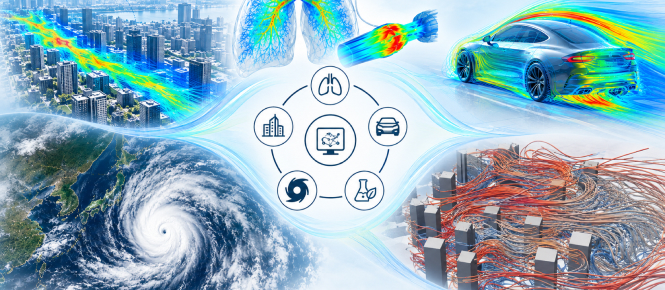
The CFS Lab investigates complex flows in real-world scenarios, e.g., urban, biomedical, environmental, or automotive applications. Our research integrates flow simulations or experiments with larger physical and computational systems, e.g., open-source software, machine learning models, or optimization frameworks, to develop efficient and application-oriented solutions.
Mechanical Systems with Intelligence and Computer Vision Lab
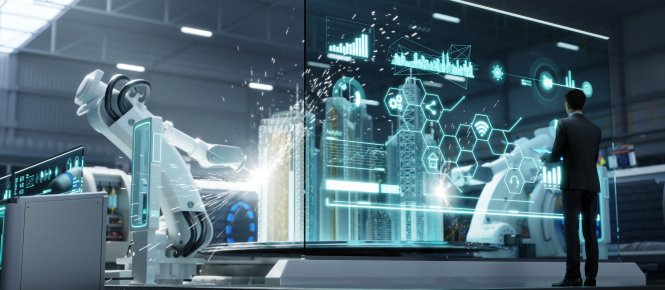
MEIC focuses on exploiting 'Engineering-Soft-Power' (e.g., Computer Vision, Visual Analytics, Metaverse, Digital Twin) as a tool to develop
techniques such as 1) Remote sensing through human-machine collaboration via metaverse; 2) Computer vision-based structural defect detection and
safety diagnosis; 3) Autonomous driving of sensing platforms; 4) Homogeneous/heterogeneous vision sensing and 3D object recognition.
The vision of Multiscale CAE Lab is to become a center of excellence in designing innovative materials and devices through multiscale / multiphysics
analysis and simulation.
Physics-of-Failure (PoF) is an engineering-based approach to reliability that uses modeling and simulation to eliminate failures and optimize design
by addressing root-cause failure mechanisms.